
Tuesday, 3 January 2017

Pet of the month; Hall of fame - Jimmy


10 year old Jimmy is our brave pet of the month after a dog attack left him with a dreadful injury. Jimmy was rushed straight in to vet Rachel and it was apparent he'd sustained a large wound to the back of his neck and on his shoulder. Jimmy was admitted to the hospital where he was given pain relief and antibiotics, and placed onto an intravenous drip to treat shock.
Image Not Found
Vet Katie assessed Jimmy the following day and although he had received damage to the skin and soft tissue layers, the bite had not damaged vital structures in his neck or chest. He also had a few puncture wounds along his back. Due to the extent of Jimmy’s wound, Katie needed to give him a general anaesthetic so that she could treat the wound further. Because a dog’s mouth is full of bacteria, a bite wound will introduce bacteria to the wound, so firstly Katie thoroughly flushed the wound to reduce the bacteria in the tissues and remove visible dirt. She then checked the skin and tissues for their health and removed some damaged areas – a procedure called debridement. Katie had to reduce the dead space in the wound using stitches; Dead space is formed when the skin is pulled away from the underlying tissue creating a space. Poor Jimmy has likely been shaken  cause this wound.  When the space is large, as in Jimmy's case, fluid can accumulate under the skin once the wound is stitched closed and bacteria can thrive. To reduce this risk, Katie inserted a drain; a latex rubber tube that allows fluid to drain out of the wound. You can see the drain poking out the bottom of Jimmy's wound (see picture above).
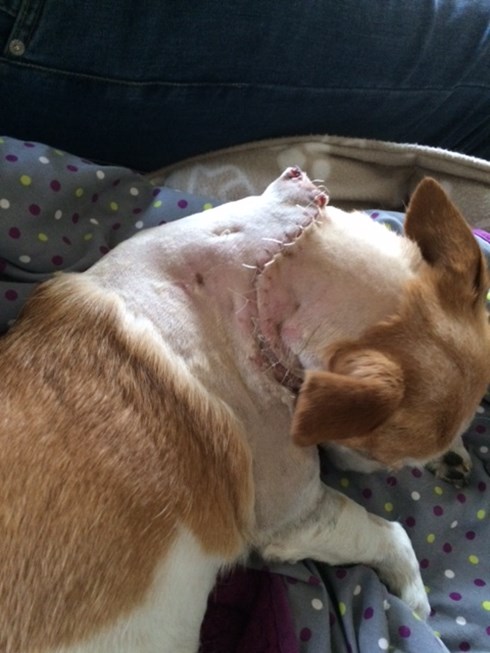
The following day brave Jimmy was feeling a bit brighter and the nurses took him outside for a potter around the garden. His wound looked good and the nurses encouraged him to eat with some freshly cooked chicken. Jimmy’s owners felt confident to have him at home, so they came and collected him later that evening. He came back in over the next two days to have his wound checked and the drain removed. We were really happy with how well Jimmy was getting on especially as there can be complications with infection and the breakdown of stitches.

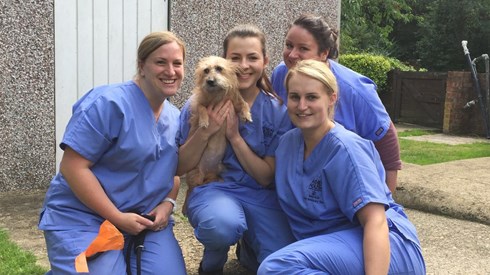
Katie saw Jimmy back for his next visit and was able to remove some of his many stitches. He continued to do well and two weeks after his initial visit, Jimmy had the last of his stitches removed. We are so pleased with the recovery he’s made.


What a super little dog he is!-Well done Jimmy!  


Friday, 9 December 2016

Pet safety at Christmas


Our poem is a reminder to have a pet-safe Christmas!


Twas the night before Christmas.....and at Arden House, Albert was dreaming of a new catnip mouse; when in walked the vet with some patients to see, first a kitten had fallen out of a Christmas tree. Mimi had tried to climb to the top, the tree toppled over and down she dropped! Felix had swallowed red tinsel strands, he was now being sick; an operation was planned.

With everything well and the animals fed, and Albert still asleep in his nice comfy bed. Loudly the phone started to ring...’It’s my dog’ said the owner, ‘she’s raided the bin!’ Penny the Labrador’s groans could be heard; She’d eaten the bones from the cooked Christmas bird. ‘I’ll need to see her’ the vet explained as Penny was in a lot of pain.


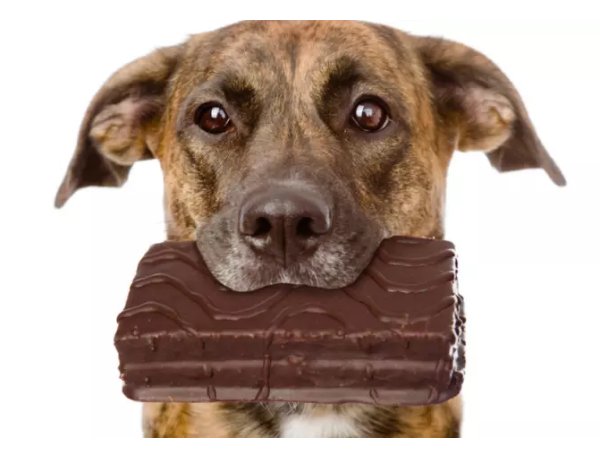
At the hospital Penny was admitted to stay, to receive care throughout Christmas Day. The sound of the phone rang out again. ‘I’m worried about my dog!’ an owner exclaimed. ‘What’s happened?’ asked the vet concerned; she’d eaten a bar of dark chocolate he learned.
Image result for dog christmas chocolate poisoning
‘Please bring her straight in for emergency care’ the vet advised as fully aware, that a compound in chocolate in pets is toxic and likely to be what’s making her sick.

With the patients all treated and settled, the vet went to put on the kettle. When up on the roof, the sound of hooves- the arrival of somebody special! 'I have a gift for Albert the cat' greeted Santa wiping his boots on the mat.'And one of my reindeer has injured his foot, would you be so kind to take a look'?

The vet heard of Dasher's plight, he'd slipped on ice when he landed from flight. An x-ray showed no broken bones, the reindeer was fit to fly to more homes. With tablets prescribed to help Dasher's pain, it was time for Santa to take the reins. 'Merry Christmas to you, Ho Ho Ho' beamed Santa as he prepared to go. With Rudolph's nose providing the light, off whizzed his sleigh into the night!


Here are a few more hazards to look out for over the festive period;                               


Batteries....
Ingestion of batteries is more common at this time of year.  If the battery is chewed and pierced it can cause chemical burns and heavy metal poisoning. If they are swallowed whole it is possible they will cause an obstruction. All batteries are potentially toxic so if you suspect your dog has chewed or swallowed a battery - please call us.


If you think that your pet may have eaten something that it shouldn't then
swift action is necessary. Please do not wait for your pet to suffer.

Follow these four simple steps:

  • Step 1 - Prevent your pet from eating any more.
  • Step 2 - Phone your vet immediately!
  • Step 3 - Stay calm and follow your vet's instructions.
  • Step 4 - Collect the relevant wrapping and packaging.
Make a note of our phone number and call us immediately -

01895 633600


Remember;


Christmas time often means a busy home, with friends and family coming together in seasonal spirit. Remember that new faces and more noise can be scary for your pet, so it’s a good idea to provide them with a safe room so they can escape and be put at ease if it all becomes too much. It’s also important to maintain your pet’s normal routines, especially with feeding and exercise, to avoid them becoming too unsettled.


       Disclaimer:
      The contents of the Arden House Animal Hospital website are for informational purposes only. The content is not intended to be a substitute for professional veterinary advice, diagnosis, or treatment. Always seek the advice of your Veterinary Surgeon with any questions you may have regarding your animal’s medical condition. Never disregard professional medical advice or delay in seeking it because of something you have read on this website. 


Tuesday, 18 October 2016

Pet Hall of Fame - Honey

At the end of April, Honey was admitted to the hospital after suffering from back pain and hind leg weakness due to a slipped disc in her spine.

She required strict rest so her owner decided to leave Honey with us in the hospital for a few weeks. She was put onto treatment to relieve the pain and to reduce the inflammation. Although a little tentative to begin with, Honey started to enjoy a cuddle with the nurses as she gradually started to feel better in herself. It was lovely to see her greeting us with a waggy tail and she was quite happy to potter about in the garden with the nurses. She went home on the 6th June and all was well until she suffered a set back two weeks later. Poor Honey was in a lot of pain and she was having difficulty standing. After some emergency treatment, it was decided that Honey needed to be referred to a specialist veterinary hospital for further treatment. At the referral hospital Honey was given an MRI scan that revealed some disc extrusion in her lower back (lumbar spine) that was pressing on her spinal cord. She required immediate surgery to remove the disc material and relieve the pressure. Honey also suffers from a heart condition so it was an anxious wait for Honey’s owner as she underwent the operation. This brave little dog recovered very well from the surgery and she continued to receive nursing care at the referral hospital for a further 5 days. Honey's surgeon was really pleased with her progress and on the 1st July, Honey was allowed home. She was discharged with a strict exercise regime that started with 4 weeks of confinement in which she was only allowed out into the garden on a lead for toilet breaks.

 Although Honey’s owner knew she’d miss her terribly, she decided that she’d benefit from another stay with us. Honey’s owner was also in the middle of finalising her house sale, so having Honey stay with us to recuperate was one less thing for her to worry about. 

Honey settled in well but was a little apprehensive of being touched. With a little coaxing and some juicy chicken treats, she gradually gained confidence and was soon back to her happy self. On the 6th August, with her owner’s move complete, Honey went home - to her new home in Somerset.
We are so pleased to hear that Honey continues to do well – she especially enjoys her walks on the downs and when she’s walked far enough, she travels in style in her pet stroller! Well done brave gorgeous girl xx


Thursday, 25 August 2016

Pet of the month Hall of Fame - Mimi

Gorgeous Mimi was rushed into our Ruislip hospital after being hit by a car one Thursday morning. Vet Rachel examined her and found that she was in shock and in pain around her back end. She was admitted to the hospital, placed onto a drip and given pain relief.
Concerned that Mimi's pelvis might be broken, she was scheduled for an x-ray the following day once we were happy that she was stable from the accident itself. Brave Mimi was given a general anaesthetic so that we could take the x-rays and the results revealed that she had broken her pelvis in several places. The good news was that Mimi was able to walk ok and go to the toilet normally. We sent her x-rays to a specialist orthopaedic surgeon for their opinion and it was concluded that the best course of action for Mimi was rest, with restricted and controlled movement. 

Mimi stayed in hospital with us for a few days so that we could manage her pain and she soon started to feel more comfortable, showing us her adorable, happy personality. Mimi is now back home with her owners and we are continuing to monitor her progress.

She is doing very well and despite all that she has been through, she remains a beautiful bubbly Bichon!


Monday, 20 June 2016

The footballer's injury


Cruciate ligament rupture is the famous knee
injury of professional footballers. Dogs (rarely cats) can damage this ligament too but the nature of this injury in dogs is very different to that of humans. 


What are cruciate ligaments? 


The knee (stifle) is a complex joint comprised of the patella (kneecap), cartilage called the menisci that cushions the knee, cartilage lining the joint and a series of ligaments connecting the femur (thigh bone) to the tibia (shin bone). Together, these components enable the joint to function properly. The knee has two essential stabilising ligaments that cross over one another inside the knee joint. They are called the cranial cruciate ligament and the caudal cruciate ligament.

The cranial cruciate ligament is most commonly ruptured (torn).


Causes and signs of knee ligament damage; 

1. Ageing of the ligament (degeneration); - Cranial cruciate ligament disease.
This is the most common cause in dogs. As the ligament weakens over time, the dog will slowly become lame as a result of  the disease. They may be reluctant to get up, run or climb stairs and the limp may worsen after exercise and improve after rest. The knee is often swollen with varying degrees of pain, and muscle wastage can occur where the dog is not using the affected leg properly.

Factors that may contribute to degeneration and failure of the ligament include;
  • Obesity- excessive weight puts an extra strain on the knee joints.
  • Individual conformation - The shape/structure of a dog's legs.
  • Genetic factor - Some breeds of dog are particularly prone to cruciate injury (including Rottweilers, Labradors, Boxers, West Highland White Terriers, Newfoundlands).


2. Trauma;
Rupture of a healthy ligament (like in people) is rare in dogs.
This is usually as a result of a sudden twist of the hind leg or over-extension of the knee. This could occur if a dog suddenly changes direction whilst running for example.
Following trauma to the knee, a dog will have a sudden onset of lameness and usually hold the foot of the affected leg off the ground.


Diagnosis: The vet will carry out a thorough examination of your dog, looking at how they walk, and manipulate the knee joint to test for instability and looseness. In some cases, examination of the joint is necessary under sedation to enable the detection of more subtle instability of the knee as occurs with a partial tear of the ligament. Secondarily, an x-ray will be taken to provide additional information -  to see if there is fluid accumulation in the joint, the degree of arthritis and to rule out other possible causes.


Surgery is generally recommended for cruciate ligament rupture since it is the only way to permanently control the instability in the stifle joint & to evaluate the structures within the joint. There are different surgical options - stabilising the knee using an artificial replacement ligament, essentially mimicking the action of the original cruciate ligament, and techniques that involve cutting and re-positioning the Tibia (shin bone) to alter the mechanics of the knee joint to improve functionality. Referral to a specialist is required for the latter. The best option for your pet depends on many factors such as your pet’s activity level, size, age, conformation, and the degree of knee instability. Sometimes small dogs can be managed satisfactorily with out the need for surgery, depending on the severity of the injury. Recovery from cruciate surgery can take anything from 4-6 months and it is vital that you work closely with your vet and follow the rehabilitation plan. 

While prevention of injuries is difficult, there are some factors that can decrease the likelihood of cruciate ligament damage. First and foremost is avoiding obesity and secondly a good fitness level of regular (but not excessive) exercise is advised. Please speak to your vet or nurse!

In conclusion, cranial cruciate ligament disease is a common condition affecting the knee joints of dogs. There is no one perfect solution and unfortunately arthritis will gradually progress whatever the treatment. However, with carefully selected management, most patients can continue to enjoy a good quality of life.


Disclaimer

The contents of the Arden House Animal Hospital website are for informational purposes only. The content is not intended to be a substitute for professional veterinary advice, diagnosis, or treatment. Always seek the advice of your Veterinary Surgeon with any questions you may have regarding your animal’s medical condition. Never disregard professional medical advice or delay in seeking it because of something you have read on this website.

Friday, 15 April 2016

Pet Hall of Fame

Lucy 

4.5 year old Lucy has been a regular visitor to the practice since May this year after she was diagnosed with Lymphoma.
The term “lymphoma” describes a cancer that is derived from white blood cells called lymphocytes. Lymphocytes normally function as part of the immune system to protect the body from infection. Although lymphoma can affect virtually any organ in the body, it most commonly arises in organs that function as part of the immune system such as the lymph nodes, spleen, and bone marrow.
On examination, Lucy's lymph nodes were enlarged. She required a surgical procedure to have a lymph node removed and it was sent to the laboratory for analysis. The result showed that Lucy has got a high-grade Lymphoma.

Vet Nigel and Lucy's owners discussed the treatment that she would need and the life expectancy with the disease. Lucy's owners made the decision to treat the Lymphoma which is aimed at slowing down it's progression. The disease is not curable,  so the ultimate goal of the treatment is to improve the quality of and prolong Lucy's life.


Lucy's treatment regime involves a combination of a chemotherapy tablet, chemotherapy intravenous injections and a steroid tablet.
Initially Lucy was a bit anxious of coming into the practice for her injections, but she has learnt to trust us and enjoys the fuss made of her (as you can see from her happy face in the picture).


Lucy sadly lost her battle with Lymphoma in March. She continued to enjoy her walks right up until the time came for her owner's to make the brave decision to end her battle with Lymphoma.

A lovely dog 


Monday, 14 March 2016

Easter colouring Competition!

Hoppy Easter!

What better way to brighten up our waiting room this Easter, than to host an Easter bunny colouring competition! All entries received will be displayed in the reception area of your local branch and the winners from each category will receive a prize!

We have two age categories; 

Age 4-7 years
Age 8 -11years

Simply click on the link below to print off the entry form or pick up a copy from your local branch.


 Click here for the Easter Bunny colouring template

Drop your completed entry into your local practice or post them to our Ruislip hospital;
Colouring Competition
56 Pembroke Road
Ruislip
Middlesex
HA4 8NF

Ensure that you write your Name, Age and contact telephone number on the back of your picture.

All entries must be received by 12noon on Tuesday 29th March.

Happy colouring!