Tuesday, 29 October 2019

Take the fright out of Halloween - Tips for keeping your pet safe.


Halloween has become more popular each year with parties being held, fireworks being let off and children out trick or treating. Here are a few reminders to ensure that your pet stays safe 🎃 ;

  • All the noise and excitement of Halloween can be unsettling and distressing for animals, so provide them with a safe, quiet and secure area in which to retreat, complete with their favourite bed, blanket and toys.
  • Take your dog out for a walk before the evening activities get under way.
  • Keep your cat indoors.
  • Keep all edibles out of the reach of your pet, especially chocolate and treats that contain the natural sweetener xylitol as these can be toxic to pets.  Should your pet eat either of these products, please call your vet immediately for advice.

  • Keep pets away from the front door. Children in costumes can scare a pet and with the door opening and closing frequently, you don't want them escaping.
  • To avoid the door bell repeatedly ringing, stand outside during the busiest time to hand out the treats.
  • Do not dress your pet up unless they are completely comfortable with this and ensure that the accessories are kept simple. Supervise your pet at all times.
  • Take care if you are using candles - wagging tails and swatting paws can knock them over.
  • Keep glow sticks and glow accessories out of the reach of pets. Even though they aren’t necessarily toxic, if chewed, they can cause your pet to salivate excessively and act abnormally - seek advice from your vet.
And remember, 


Monday, 15 July 2019

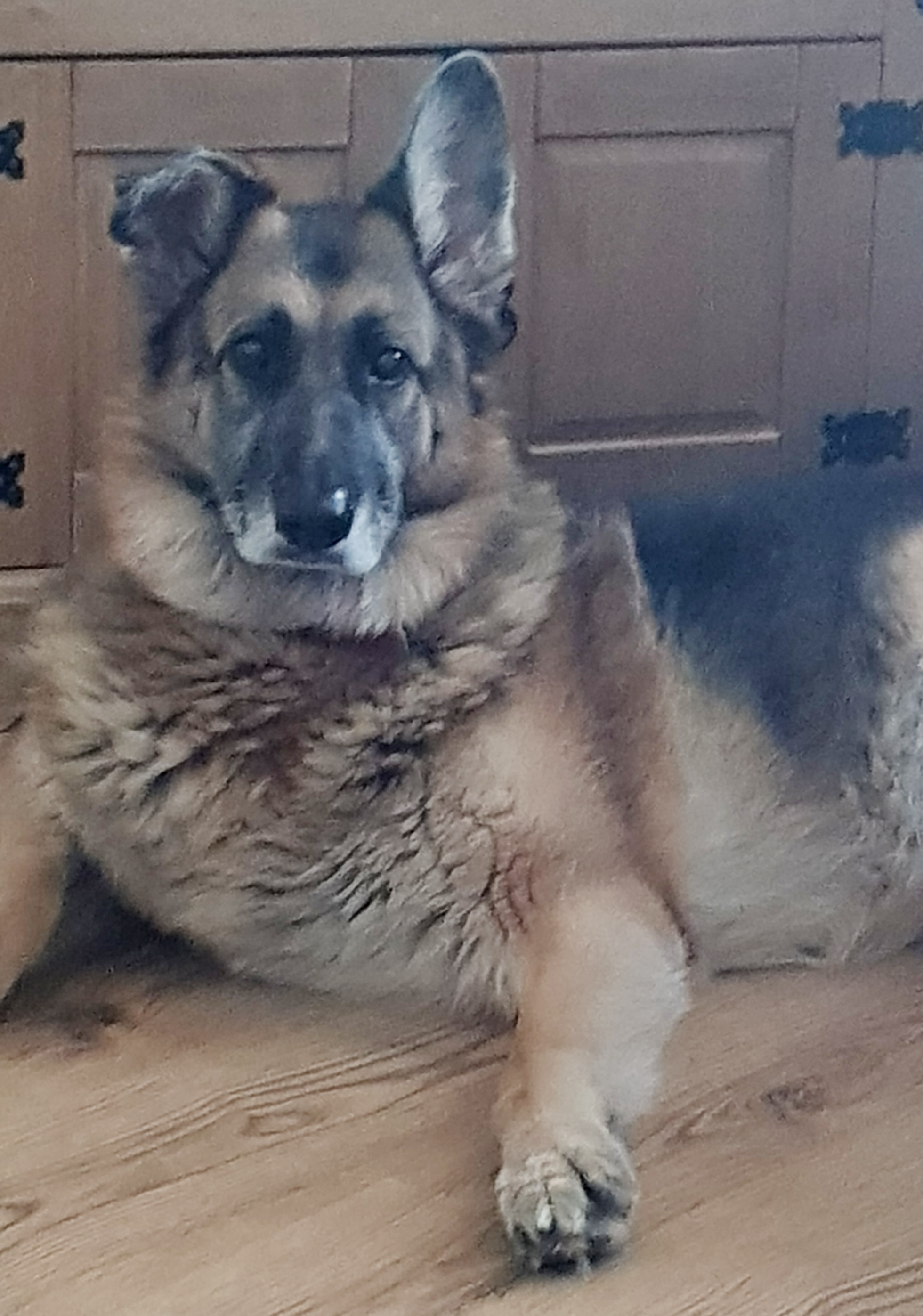
Pet of the month hall of fame -Max

Max is our brave pet of the month after a dog attack left him with a nasty injury. 


Vet Celia was on duty when she received a telephone call from Max's concerned owners and arranged  to immediately see him. It was apparent that he'd sustained a large wound on his back. Celia assessed Max's condition by firstly evaluating his airway, breathing and circulation. She listened to his heart and lungs and checked his limbs and abdomen for signs of trauma. Although Max had received nasty bite wounds to the skin and soft tissue layers, they had not damaged any vital structures in his neck or chest and his condition was stable. Celia clipped the large wound on his back and discovered that Max also had some smaller puncture wounds. The puncture holes on the skin are often only a small portion of the significant damage that may have occurred to the muscles and tissues underneath the skin. Max would need to be monitored for further signs of swelling and bruising. Celia cleaned and flushed the wounds and prescribed Max some pain relief medication and antibiotics. Because a dog's mouth is full of bacteria, a bite  can introduce infection into the wound and underlying tissue. With the risk of infection high, Celia decided to initially treat the wound as open (not stitched). This allows any infection to clear before deciding if surgery is required to close the wound. Max's owners bathed his wounds at home and gave him his antibiotics as instructed by Celia, but at his check up a couple of days later, Celia was concerned about some swelling under the skin. She suspected that the infection was progressing so she introduced a combination of different antibiotics to help fight it. 

After another few days, Celia assessed Max's wounds again and at this stage she could see that some of the skin tissues were beginning to die. Necrosis (tissue cell death) can occur after a serious injury or infection. Despite this, there was also some promising progress. Max's owners had done a wonderful job of cleaning his wounds and giving him his medication and Celia could now see some healthier underlying tissue developing. The infective discharge had cleared up. The next step was for Celia to give Max a general anaesthetic so that she could surgically repair the wounds. 

Celia needed to remove the necrotic, damaged tissue and assess the remaining tissue health - a procedure called debridement. An area of dead space can form with these types of wounds. This is where the skin is pulled away from the underlying tissue creating a space in which fluid can accumulate under the skin. Celia inserted a drain; a latex rubber tube that allows fluid to drain out of the wound. Celia then closed the healthy wound edges together using walking sutures, a stitching technique that helps to reduce tension of the skin.

Max recovered well from the general anaesthetic and was allowed home the same evening. Unfortunately the drain came out so we needed to observe the wound for signs of swelling that could indicate the formation of a seroma. A seroma is fluid (serum) that has accumulated in a dead space in the tissue. It is the product of tissue inflammation and the body's defence mechanisms.

Max's owners did really well to keep him rested and his wound clean whilst it healed .After ten days, Celia was very pleased with how well Max's wound had healed and removed his stitches. However, she could see that the area looked puffy. With no signs of infection, Celia diagnosed a seroma. She opted to leave it alone rather than intervene as often the body will slowly reabsorb the fluid and it will eventually shrink and disappear.
Max was kept quiet and rested for a further 10 days and his owners ensured that he remained bright and comfortable.


After another 10 days, Celia checked Max. It was brilliant news -  she was able to sign him off as his wound had completely healed! Max had really missed his walks and it was great that he could now start to enjoy them again. 
After six weeks of treatment, we are so happy to see that Max has recovered.

For his patience and bravery, this lovely boy is our much deserved pet of the month! 


Tuesday, 4 June 2019

Rabbit awareness at Arden House!


We are supporting rabbit awareness week by offering a whole month of free rabbit checks with a vet between Monday 3rd June - Saturday 29th June!
🐇Please call and book an appointment! 🐇

This year's Rabbit Awareness Week theme is 'Protect and Prevent' raising awareness around Rabbit Viral Haemorrhagic Disease 2 (RVHD2).

Rabbits are normally vaccinated annually against two diseases, myxomatosis and rabbit viral haemorrhagic disease ( RVHD1).

RVHD2 is a new variant of the RVHD1 virus which causes internal bleeding and like RVHD1 is often fatal. 

Therefore, the best way to protect your rabbits is to vaccinate them! 
We recommend that rabbits are vaccinated against myxomatosis- RVHD1 followed by an additional vaccine for RVHD2,  given two weeks later. 
🌟 To help try and get more bunnies vaccinated against RVHD2, we have a 20% discount on this vaccine throughout June ( cost £24.00). 🌟


Examining your rabbit;

Your bunny's wellness visit will start with one of our vets asking you questions about diet, behaviour, past medical problems. This is also the time you will be asked if there are any new problems that have arisen, concerns, or questions you may have. All of this information will be entered into your pet's digital medical record.
After all of your questions have been answered, the physical exam will start. The vet will look at the following things:

  • Teeth - Do the front teeth meet correctly? Are they overgrown?  Are the teeth being effectively worn down by chewing? Using an otoscope with a long speculum, the molars (back teeth) will be checked for sharp points called spurs.The vet will also check the lips for any sores, abrasions, drooling, or swelling.
  • Eyes - Are the eyes bright and without discharge? They will be checked for signs of swelling, infection, or tear duct obstruction.
  • Nose - Is the nose clear of discharge? Are there any signs of breathing problems ( wheezing, coughing , sneezing)? 
  • Ears - Are the ears clean and healthy? If there is ear debris, it will be checked for mites, yeast, or bacteria. The ear will be swabbed and the material examined under a microscope.
  • Skin and coat - Is the coat clean and glossy? Are there any patches of hair loss dandruff or inflamed skin? Is the rabbit itchy? Are there any lumps or bumps? Are the nails too long? 
  • Heart and lungs - is the rabbit's heart rate and rhythm normal? What is the breathing rate? Using a stethoscope, your rabbit's heart and lungs will be listened to. 
  • Bottom check - Is the rear end clean, dry and free from faeces? 
  • Abdomen - The vet will feel the abdomen to evaluate size and shape of internal organs. Are there any signs of pain or discomfort? 
  • Weight - What is the rabbits body condition score ? Are they a healthy weight for their size and breed? 


Rabbit awareness week (RAW) presents a great opportunity to learn more about rabbits and how to correctly care for them. The following link provides some great information on all aspects of rabbit care and rabbit health. Do also contact our veterinary team here at Arden House who will be happy to answer any questions you may have. 
RABBIT AWARENESS WEEK


Please note;
Your bunny should be seen urgently by a vet if they haven't eaten in the last 12 hours.

Monday, 8 April 2019

Pet of the month hall of fame - Ollie ( Feb 2019)

Our February pet of the month is the rather brave and lovely Ollie ( Age 9 years 9 mths).


Ollie's owner ( vet Louise's mum!), noticed a swelling on Ollie's left thigh, so she promptly brought him in to see Louise. Louise identified a soft oval mass that appeared to be attached to underlying tissue. The first step was to identify what the mass was, so Louise carried out a simple test called a fine needle aspirate. This involves using a needle and syringe to suck out a few cells that are then put onto a glass slide. The slide was sent to a laboratory where a pathologist examined them under a microscope in order to identify the cells. Sometimes a further biopsy is required if the results are inconclusive, but in Ollie's case the test was diagnostic and revealed that the mass was a soft tissue sarcoma. Soft tissue sarcomas are very invasive into the surrounding normal tissue and the tumour is usually larger than what is visible or felt. Ollie required an operation to remove the tumour. The aim of the surgery was to achieve complete removal of the tumour with clear surgical margins.

The area near his hip where the lump was located, has less spare skin, which can make the surgery more challenging. Greyhounds are also naturally thin skinned and this can make them more prone to problematic wound closure. 
Because the surgery was to be extensive, Louise referred Ollie to a soft tissue specialist. 
Ollie's operation went well; the first stage was to remove the tumour, before the surgeon used a skin flap technique to close the large remaining wound.This was the best option for bringing the wound edges together under the least amount of tension. Post operatively, Ollie spent a few days in hospital at the referral centre. He was a good boy, apart from when he managed to take his buster collar off and nibble at a stitch! The nibbled stitch was at the tip of the flap that had the worst blood supply, so there was already a concern that this part of the wound might not hold together. 
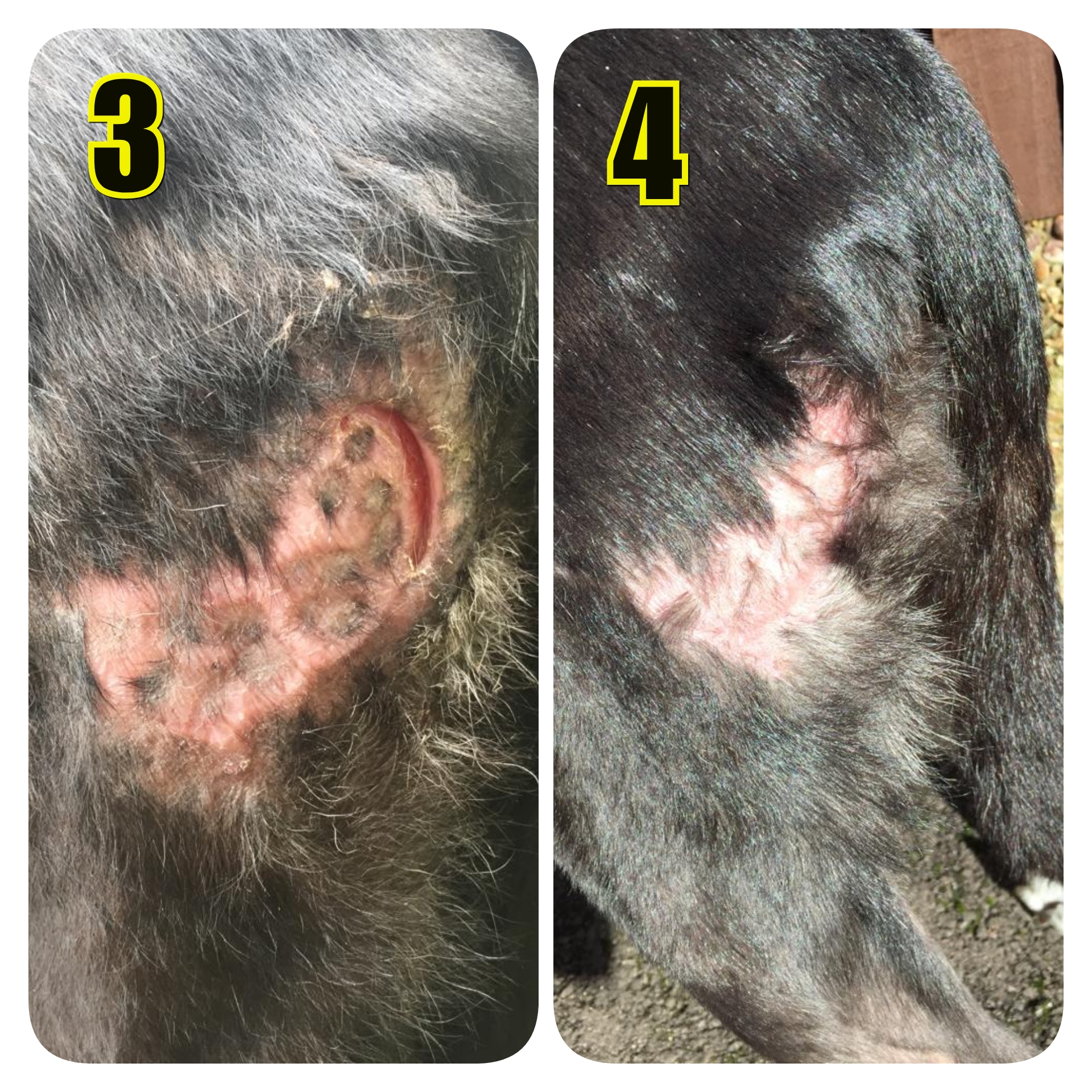
Ollie was allowed home on strict rest, but on day three of being home, Ollie decided to have a roll around on the floor and the wound opened up further (wound picture1). Louise spoke to the specialist and it was decided that the best course of action was to attempt to re-close the wound. Louise carried out the procedure.With Ollie anaesthetised, she flushed the wound and closed it using special tension relieving stitches called walking sutures.For Ollie's wound to have the best chance of healing he needed to be kept quiet and rested, so he was to spend the next 10 - 14 days in hospital.Ollie was given pain relief medication to help keep him comfortable as well as antibiotics. He also had to wear a buster collar again so that he couldn't lick the area. The nurse's gave him lots of cuddles as he was understandably feeling rather sorry for himself.Ollie's wound was monitored closely; it was beginning to heal, apart from the one problem area at the top of the wound. Senior nurse Dayna recommended daily dressings using medical grade manuka honey that supports the healing process (wound picture 2). He was such a brave boy as it must have been sore having it dressed. 


The area on Ollie's thigh was difficult to bandage, so to help keep the dressing in place, he wore a special body bandage. Ollie was doing well and his wound was looking better, when he unfortunately suffered a set back.
Ollie managed to remove the buster collar and body bandage that he'd been comfortably wearing, licked the wound and opened it up again!
Ollie was referred back to the specialist centre and he was admitted to the hospital for open wound management.They attached his buster collar to a special harness so that he couldn't get it off.


Although his wound was looking healthy, it was taking a long time to heal, so the decision was made to perform punch skin grafts. To do this, Ollie was given a general anaesthetic. An area on his abdomen was clipped and cleaned to allow the surgeon to remove small pieces of circular skin from the site. He then placed them into the granulation tissue ( healing tissue) of the wound. It was hoped that the majority of the punched biopsies would 'take' allowing new skin to build between them (epithelialisation).Ollie recovered well from the procedure and continued with strict cage rest. Three weeks later Ollie was allowed home from hospital. Louise continued to dress the wound every three days. Healthy pink epithelial tissue formed ( wound picture 3) and finally his wound healed (wound picture 4).There is no fur on the skin over the grafted areas as it came from the hairless skin on his tummy!

Following analysis of the tumour at the laboratory, the results were encouraging. The surgeon had managed to remove the whole tumour and immunohistochemistry testing gave it a low grade result.There is a low chance of recurrence so to be on the safe side we will monitor Ollie regularly. 

 It's been a long road to recovery and we are so pleased to see that Ollie is his happy self again and enjoying his most favourite thing - walks with his friend, Nigel the Whippet!

For his patience and bravery, Ollie is our much deserved pet of the month! 

Friday, 8 February 2019

Twinkles - Pet of the Month - Hall of Fame ( October 2018)


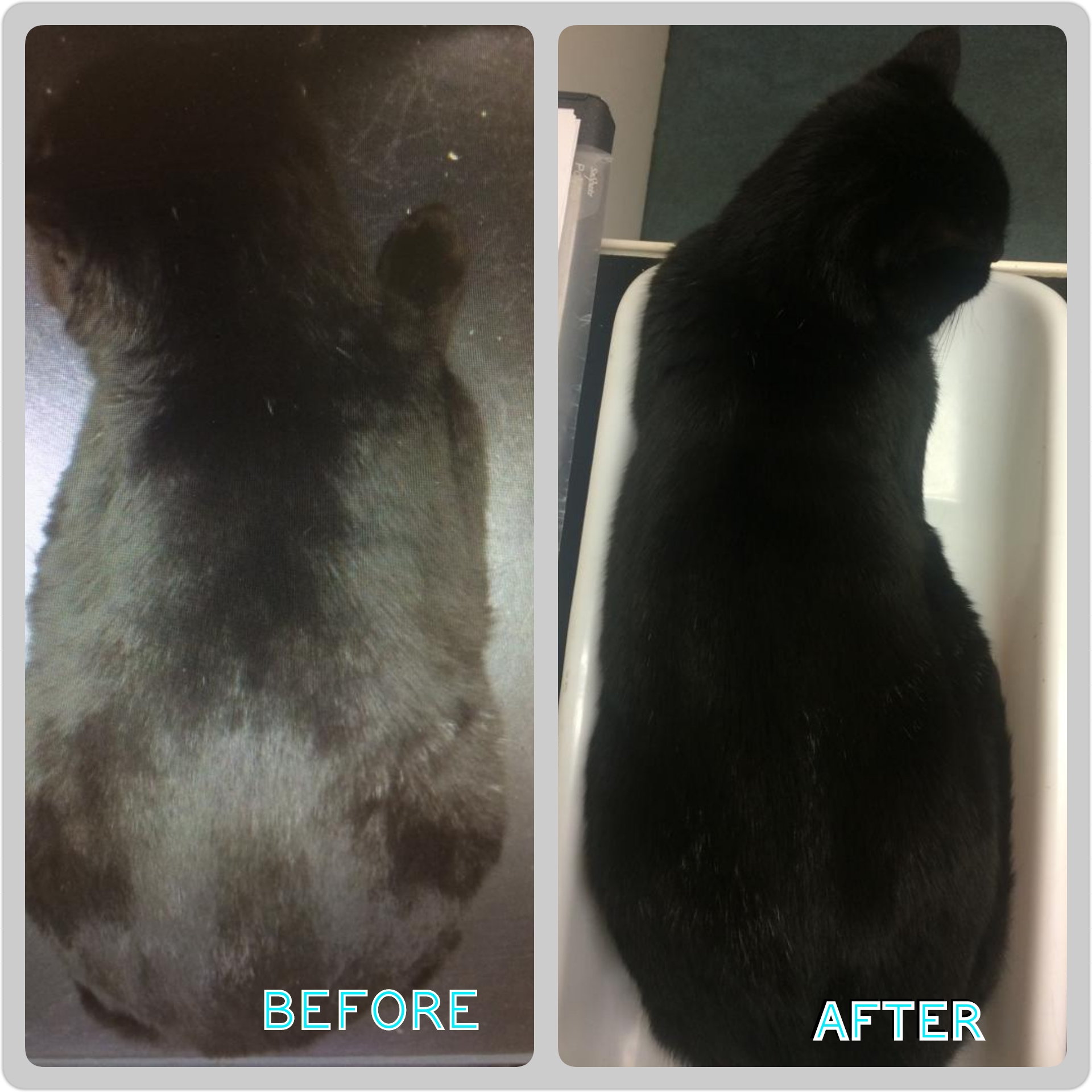
Thirteen year old Twinkles is October's pet of the month after successfully completing a weight management programme. Twinkles' weight had crept up to 7.2kg ( in August 2017) and at home he was lethargic and lacklustre. With there being an increased risk of developing health issues such as diabetes, heart disease and arthritis, vet Cathy advised that Twinkles be put onto a diet and exercise plan under the supervision of senior nurse Dayna. At his first visit to our 'podgy pets' club, Dayna assessed Twinkles' body condition score and weight.


Regular and accurate weighing of cats is important, however, the weight of the cat is only part of the story. The weight of a healthy adult cat can actually be quite variable - from less than 3kg for a small cat to more than 6kg for a large cat. On a 9 point scale where 1 is underweight and 9 is obese; cats should ideally maintain a body condition score of between 4 and 5. Dayna measured Twinkles score as 8/9. As a result, Dayna decided that Twinkles would benefit from being placed onto a prescription diet food called Satiety that is precisely developed to provide optimum protein, energy and other nutrients for adult cats following a weight loss programme. It is also designed to help satisfy hunger.

Switching a pet to a new food should be done gradually as a sudden change in diet can cause a dietary upset or refusal to eat the unfamiliar food.Twinkles preferred wet food and adapted very well to his new diet. Dayna gave Twinkles' owner exact instructions on how much food to feed him each day and recommended that the daily amount be divided into 3 - 4 separate servings so that he wouldn't have to wait too long between meals. To help keep his begging at bay, Twinkles was allowed a measured amount of dry satiety biscuits that his owner placed into food puzzles to encourage him to work for a treat and bring out his foraging instinct.


Dayna arranged to see Twinkles evey 2-3 weeks so that she could monitor his progress and adjust food quantities accordingly. This is very important as she didn't want him to lose weight too quickly - losing weight rapidly can cause health complications. On the other hand losing weight too slowly can be disheartening. Dayna set a target for Twinkles to achieve at each visit to ensure his weight loss was at a gradual controlled rate and it was very rewarding to see him progressing in the right direction. Twinkles' owner encouraged him to exercise by providing him with toys to get him moving. His activities included catnip mouse stalking and fishing rod toy chasing! After 5 months (January 2018), Twinkles weight was 6.05kg and his body condition score, 6.5/9. Along with the physical changes in his body shape, Twinkles was more active ande surprised his owner by jumping up onto the back of her arm chair, something he hadn't attempted to do in the past.


Twinkles has continued to do well and in October he reached his target weight of 5.5kg - an amazing total weight loss of 1.7kg! He has rediscovered his inner kitten - from a cat that wanted to sit all day, he is now more mobile and playful! Being less able to groom himself effectively when he was overweight, Twinkles coat was dull, but it is now noticeably shiny and soft . 
Twinkles name could not be more apt, he is such a star and a much deserved pet of the month! Also, a big well done to his owner for her dedication to Twinkles weight loss success.           

Friday, 1 February 2019

Arthritis Awareness


With the colder winter weather some of us will be noticing our joints are feeling more achy and the same will be true of our dogs and cats. Cool weather can leave joints especially stiff and tender, meaning an increase in discomfort for pets suffering from arthritis or even highlight that you pet is suffering from the condition.


What is it?

Osteoarthritis, or degenerative joint disease, is the inflammation of the joints caused by wear and tear of the cartilage and the other associated tissues. Cartilage covers and protects the ends of the bones in a movable (synovial) joint. The cartilage has no nerves so when it touches the cartilage of another bone, there is no pain.


When the cartilage wears away, the bone is exposed. The bone does have nerves so when the two bone ends in a joint touch each other it results in pain and inflammation – signals that arthritis is present. In degenerative joint disease we also see small bony projections (osteophytes) form on the bone that is close to the joint. This adds to the pain. This type of arthritis is progressive, meaning it continues to get worse. 


What causes it?


Osteoarthritis is either age related as a result of wear and tear on the joint, or secondary to another problem within the joint, such as hip dysplasia, a ruptured cruciate ligament or trauma.


Signs of arthritis

Arthritis by its nature develops gradually so animals tend to learn to cope with the discomfort without showing any obvious pain. As a result some dogs and cats can appear to be very stoical about the pain from arthritis- often it is only once the pain has been treated that owners realise how much their pet was suffering.


Signs of arthritis in dogs include;
                   

🐶Sitting down on walks.                                 
🐶Slowing down on walks
🐶Stiffness, especially getting up after rest 
🐶Reduced activity
🐶Hesitancy to climb steps
🐶Difficulty jumping into the car
🐶Change in character (restless, anxious withdrawn, clingy, grumpiness)
🐶Limping
🐶Quiet - spending less time playing with family; which can be mistaken for a sign of 'aging'
🐶Excessively licking over a joint
🐶 Swollen joints
🐶Painful joints                                                                   
                                                                                                                                                                

Signs of arthritis in cats include;


🙀Reluctance to play and exercise
🙀 Lose ability to jump up to, or down from heights.
🙀Sleeping more                              
🙀No longer grooming themselves
🙀 Irritable/grumpy when stroke
🙀 Grumpiness
🙀 Crying when picked up
🙀Difficulty stepping into litter tray
🙀Difficulty stepping through the cat flap


We recommend a visit to see one of our vets if any of these signs (or other changes) are noticed in your pet.


How is arthritis diagnosed?


Your vet may suspect that your pet has arthritis from the signs you describe and by performing a thorough health check. The vet will manipulate the joints gently to check for swellings, heat, evidence of pain, range of movement and crepitus (a grating feeling when the joint is manipulated). Sometimes it is necessary to take an x-ray to find out what is going on in the joints. This usually requires a sedation or general anaesthesia and a separate day appointment is arranged for this.


How is osteoarthritis treated?


The goal of treatment is to decrease pain, minimise lameness, improve mobility and provide a good quality of life for affected patients. Arthritis cannot be cured.


Weight control: Dogs and cats that suffer from chronic pain caused by conditions like osteoarthritis often become inactive, which can result in obesity. Controlling your pet’s weight will lighten the load on arthritic joints and make it easier for them to move around. We appreciate that reducing the weight of an animal that finds exercise painful is not easy. Please speak to a member of staff about our weight clinics which are run free of charge. We will be happy to give ideas regarding diet, weight targets and design exercise strategies to suit your pet, as well as providing help and support whenever required.


Exercise is essential because it contributes to strengthening the muscles that support joints. Moderate amounts of low-impact exercise each day will improve joint mobility and can help get a lethargic, arthritic pet active again. Dogs will benefit from such activities as walking and swimming (hydrotherapy) ; cats can profit from play that keeps them moving without excessive jumping. Consult your veterinary surgeon about what amount and type of exercise would be best for your pet. Also, be aware that your dog or cat’s arthritis pain may be more severe at certain times than others. If this is the case, let your pet take a break from his or her exercise routine for a few days, until the painful flare-up subsides.


Medications known as non steroidal anti-inflammatory drugs, (NSAID), are often prescribed to reduce the pain and inflammation associated with arthritis. Their efficacy is well documented. Any reduction in pain at the lowest possible dose will allow for an improved quality of life and limit any possible unwanted side effects. Before use, your pet will be assessed for their general health and regularly monitored whilst on any medication. Please ask your veterinary surgeon for more information. Please note: It is NOT safe to give your pet human anti-inflammatory (NSAID) medicines.


Diet and Nutraceuticals.

There are particular diets such as the Royal Canin Mobility that can really improve the signs of arthritis. It contains both nutrients that help with the inflammation, including anti-oxidants, and helps with weight management. Do speak to your vet.


Joint supplements (nutraceuticals) are also found to be very good in some cases. These nutritional supplements are especially useful in the early stages of the disease or when recovering from a joint trauma (including surgery). They can be used solely as a preventative measure too. These supplements often include ingredients such as glucosamine and chondroitin that are useful in supporting the health of the cartilage and surrounding structures.

The regulation of such supplements is limited and as such the quality may vary greatly from one manufacturer to another. One should always use those recommended by your vet.


Making a few adjustments to your pet’s environment can help to keep them more comfortable and mobile. A few suggestions are;


  • Make sure that you provide a well padded cosy bed, out of draughts. Ensure that it can be readily accessed.
  • Allow your cat to reach their favourite places easily by placing a box or item of furniture as a launch pad.
  • Make sure that your cat can reach their litter tray easily and check that the sides aren't too tall; that they are able to step into it comfortably.
  • Reduce the need for your pet to have to climb the stairs.
  • Allow easy access to food and water without the need for your cat to jump up.
  • If your dog appears unsteady when out walking or has difficulty on uneven surfaces, a harness may offer them additional support by distributing any pressure from the lead over a larger area. This means that you may be able to assist them in keeping their balance making it easier for them to walk on uneven surfaces or going up or down stairs.
  • If you have laminate, wood or vinyl flooring that your dog is slipping or sliding on, you could consider the use of rubber backed mats, particularly where your dog would lie down, turn or stand to eat, to help them grip the floor.
  • If your dog is having difficulty reaching their bowls on the floor, you could consider raising the bowls a little off the floor or there are a variety of raised bowls on the market, to find a more comfortable height for them to eat and drink at.
  • Consider a ramp to aid your dog getting into and out of the car.


Your pet's well-being

Spend some time cleaning and grooming your pet. Check their claws to see that they aren't becoming overgrown. Encourage play and interaction to provide exercise and mental stimulation. 
Have regular check up's; it's important to maintain communication with your vet to ensure that your pet is enjoying their senior years.


Consider alternative therapies


Hydrotherapy (which involves your dog swimming in a purpose-built pool) helps to build muscle mass to better support joints. Swimming is low impact and so tends to be more comfortable for dogs with stiff joints. Other therapies, such as acupuncture, could be considered.

Your vet will be able to discuss which therapies will be most appropriate for your pet and where you will be able to find them locally.


In conclusion; 

Once arthritis has started, it cannot be cured, but if we notice the signs early and manage it carefully, we can slow down the progression of the disease, greatly reduce the symptoms and so improve your pet's quality of life.


   Disclaimer:


   The contents of the Arden House Animal Hospital website are for informational purposes only. The content is not intended to be a substitute for professional veterinary advice, diagnosis, or treatment. Always seek the advice of your Veterinary Surgeon with any questions you may have regarding your animal’s medical condition. Never disregard professional medical advice or delay in seeking it because of something you have read on this website. 



Monday, 10 December 2018

Pet safety at Christmas.


Our poem is a reminder to have a pet-safe Christmas!

Twas the night before Christmas.....and at Arden House, Albert was dreaming of a new catnip mouse; when in walked the vet with some patients to see, first a kitten had fallen out of a Christmas tree. Mimi had tried to climb to the top, the tree toppled over and down she dropped! Felix had swallowed red tinsel strands, he was now being sick; an operation was planned.


With everything well and the animals fed, and Albert still asleep in his nice comfy bed; loudly the phone started to ring...’It’s my dog’ said the owner, ‘she’s raided the bin!’ Penny the Labrador’s groans could be heard; She’d eaten the bones from the cooked Christmas bird. ‘I’ll need to see her’ the vet explained as Penny was in a lot of pain.


At the hospital Penny was admitted to stay, to receive care throughout Christmas Day. The sound of the phone rang out again. ‘I’m worried about my dog!’ an owner exclaimed.
 ‘What’s happened?’ asked the vet concerned; she’d eaten a bar of dark chocolate he learned.
‘Please bring her straight in for emergency care’ the vet advised as fully aware, that a compound in chocolate in pets is toxic and likely to be what’s making her sick.


Image result for dog christmas chocolate poisoning

Lola the pug was next to arrive
 having eaten a pack of luxury mince pies. 
Raisins and grapes are unsafe for pets,
so if eaten, it's important to contact your vet.


Image result for off the leash raisins

With the patients all treated and settled, 
the vet went to put on the kettle.
 When up on the roof, the sound of hooves -
the arrival of somebody special!
'I have a gift for Albert the cat'
 greeted Santa wiping his boots on the mat. 
' And one of my reindeer has injured his foot,
 would you be so kind to take a look?'


The vet heard of Dasher's plight,
 he'd slipped on ice when he landed from flight.
An x-ray showed no broken bones, the reindeer was fit to fly to more homes.
 With tablets prescribed to help Dasher's pain,
 it was time for Santa to take the reins.
'Merry Christmas to you, Ho Ho Ho' beamed Santa as he prepared to go.
With Rudolph's nose providing the light,
 off whizzed his sleigh into the night!

...............................................


Other hazards;


🎄Bottle corks, corn on the cob, cocktail sticks, cracker toys, ribbon and tinsel can be dangerous if swallowed. Ensure that they are tidied away or kept out of reach of pets. 


    🎄Ingestion of batteries is more common at this time of year. If the battery is chewed and pierced it can cause chemical burns and heavy metal poisoning. If they are swallowed whole it is possible they will cause an obstruction. All batteries are potentially toxic so if you suspect your dog or cat has chewed or swallowed a battery - please call us.


IN AN EMERGENCY

If you think that your pet may have eaten something that they shouldn't have then swift action is necessary.

Follow these four simple steps:

Step 1 - Prevent your pet from eating any more.
Step 2 - Phone your vet immediately!
Step 3 - Stay calm and follow your vet's instructions.
Step 4 - Collect the relevant wrapping and packaging.


     Make a note of our phone number and call us immediately -

01895 633600


Further advice 
   
   Christmas time often means a busy home, with friends and family coming together in seasonal spirit. Remember that new faces and more noise can be scary for your pet, so it’s a good idea to provide them with a safe room so they can escape and be put at ease if it all becomes too much. Be mindful of the front door opening with guests arriving and leaving. Make sure that dogs can't run out!  It’s also important to maintain your pet’s normal routines, especially with feeding and exercise, to avoid them becoming too unsettled.


      DISCLAIMER: 

      
    The contents of the Arden House Animal Hospital website are for informational purposes only. The content is not intended to be a substitute for professional veterinary advice, diagnosis, or treatment. Always seek the advice of your Veterinary Surgeon with any questions you may have regarding your animal’s medical condition. Never disregard professional medical advice or delay in seeking it because of something you have read on this website.